Leadership, Wellbeing, and Pedagogy in Arabic Supplementary Education
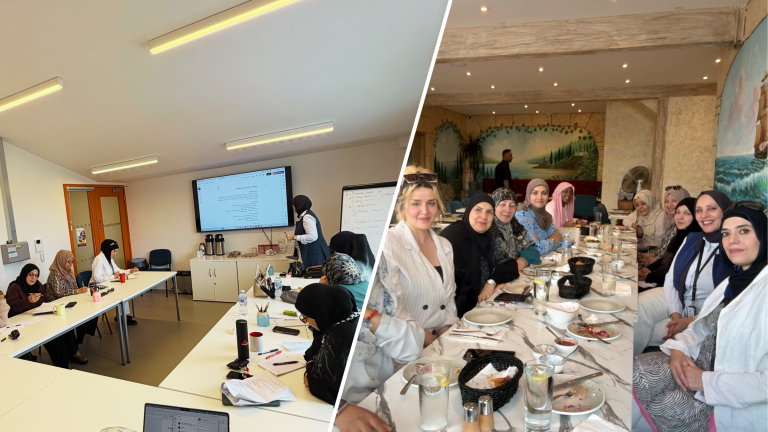
In September 2025, Educators’ Hub21 successfully conducted a four-day Training of Trainers (ToT) Workshop in London, aimed at strengthening leadership and training capacity among educators and principals of Arabic supplementary schools. The program brought together a diverse group of community educators, fostering collaboration and equipping participants with the skills, confidence, and tools to lead effectively and train others within their schools.
This initiative formed part of Educators’ Hub21’s broader mission to empower Arab educators across the UK through leadership development, teacher wellbeing, and innovation in education.
Day 1: Wellbeing & Self-Care for Trainers
The opening day focused on resilience, emotional wellbeing, and self-care as foundations of effective leadership. The “Wellbeing & Self-Care for Trainers” session introduced participants to strategies for managing stress, maintaining balance, and cultivating long-term professional sustainability.
Educators engaged in mindfulness exercises, explored positive psychology frameworks, and reflected on personal boundaries in their teaching and leadership roles. The workshop encouraged participants to develop personalised self-care plans, helping them translate theory into daily practice.
This day set the tone for the rest of the training — emphasising that educators’ wellbeing is not a luxury but a prerequisite for meaningful impact in schools and communities.
Day 2: Leadership in Education
The second day centered on leadership development, highlighting the importance of visionary, empathetic, and adaptive leadership in supplementary schools.
Participants explored various leadership models, from transformational and servant leadership to distributed leadership practices that suit community-based school settings. Through reflective discussions and team activities, attendees examined their personal leadership styles, identifying their strengths and areas for growth.
Practical exercises on vision-setting, communication, and empowerment helped participants redefine their role as both educators and change agents — individuals capable of guiding not only their students but also their peers and institutions toward excellence.
Day 3: Pedagogy and Artificial Intelligence in Education
The third day marked a forward-looking shift, focusing on the integration of Artificial Intelligence (AI) and digital pedagogy within the context of supplementary education.
Sessions explored ethical considerations, teacher preparedness, and the use of AI tools to enhance teaching and learning experiences. Participants engaged in mini-projects, designing lesson activities that combined technology with cultural and linguistic learning objectives.
The discussion also reflected on how supplementary schools can act as innovation hubs, bringing together traditional values and 21st-century life skills. By embracing digital tools responsibly, educators discovered ways to make Arabic education more interactive, inclusive, and future-ready.
Day 4: Classroom Management & Session Planning
The final day of the program brought a strong practical focus, centering on effective classroom management and session planning in diverse learning environments.
Participants examined real-life classroom challenges, shared their own experiences, and worked collaboratively to design sample session plans that incorporate inclusive and culturally responsive practices.
Key discussion areas included:
- Behaviour reinforcement strategies that nurture positive learning environments.
- Culturally responsive teaching tailored to the experiences of Arab and Muslim learners in the UK.
- Inclusive pedagogical approaches to support mixed-ability groups and promote student engagement.
The day concluded with peer feedback sessions, where educators presented their lesson plans and reflected on how they could adapt these frameworks within their own schools.
Outcomes and Next Step
By the end of the four-day workshop, participants left not only with new skills and strategies but also with a renewed sense of purpose and confidence in their roles as leaders and trainers.
Over the next six months, attendees will continue to apply their learning by training their colleagues under Educators’ Hub21’s mentorship, multiplying the impact across London’s Arabic supplementary schools.
The program demonstrated how investment in professional development can ripple outward — strengthening institutions, empowering educators, and enriching the educational landscape for thousands of learners across the UK.
A Step Toward Sustainable Educational Leadership
The ToT Workshop represents a vital step in Educators’ Hub21’s long-term vision: to build a sustainable ecosystem of empowered, well-trained, and innovative educators who are shaping the future of Arabic language and cultural education in Britain.
By placing wellbeing, leadership, and innovation at the heart of supplementary education, Educators’ Hub21 continues to affirm its commitment to excellence, collaboration, and community growth.